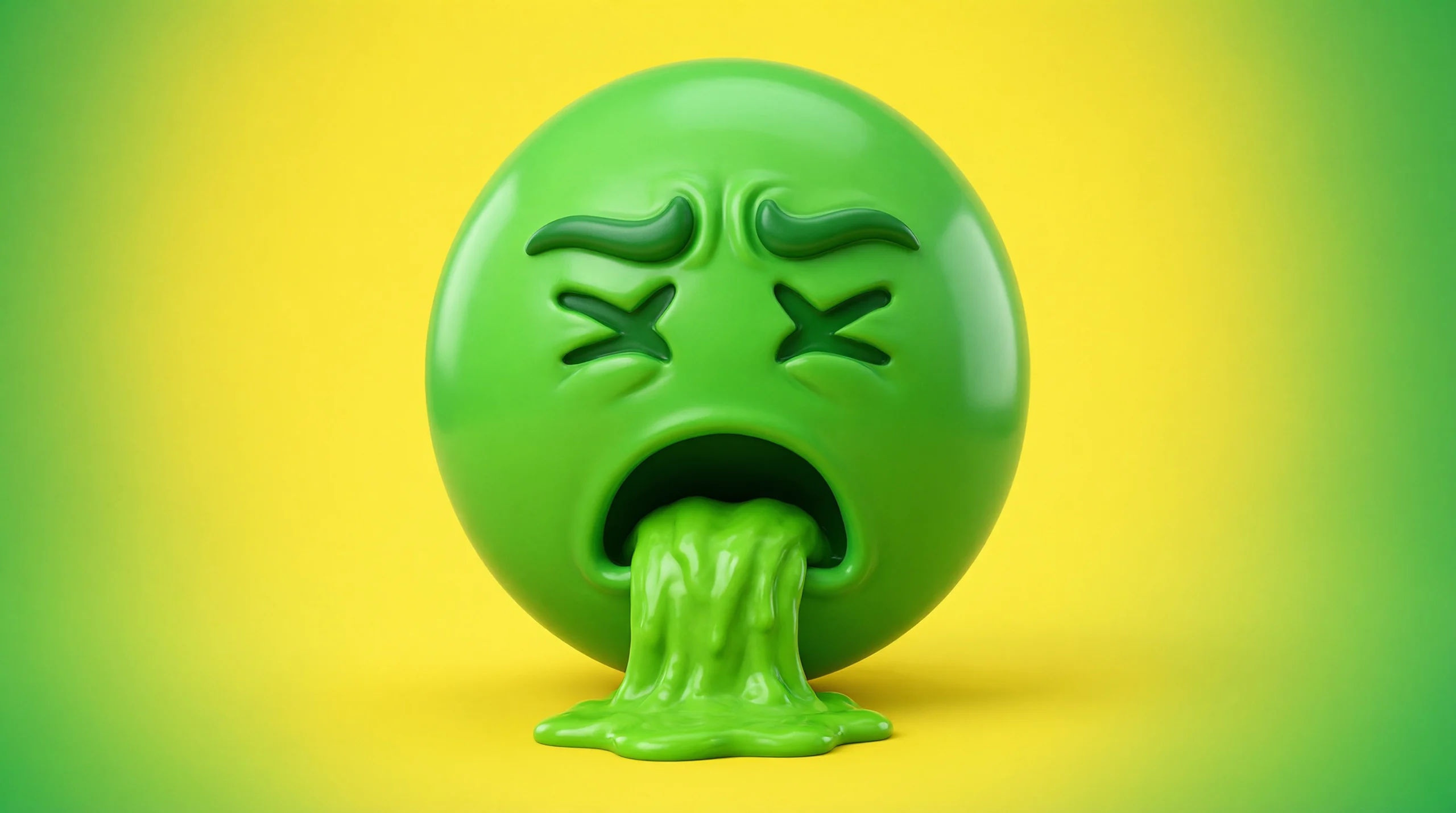
The puking emoji 🤮 is used to express disgust, nausea, sickness, or a strong negative reaction to something unpleasant. Officially known as the Face Vomiting emoji, it can describe feeling physically ill, reacting to gross food, expressing dislike, or joking about something disgusting. People commonly use it in text messages, social media posts, online conversations, and memes to communicate feelings without writing a long explanation.
If someone sends it after seeing something gross, tasting bad food, or hearing an uncomfortable story, the puking emoji makes their reaction clear. However, its meaning can change depending on the conversation, the sender’s tone, and the emoji used alongside it.
Quick Answer: What Does the Puking Emoji 🤮 Mean?
The puking emoji 🤮 represents vomiting, nausea, disgust, and extreme dislike. It is often used when something looks, tastes, smells, or feels unpleasant. It can also express shock, embarrassment, sarcasm, or playful exaggeration in casual online conversations.
Puking emoji at a glance:
- Emoji: 🤮
- Common name: Puking emoji or vomiting emoji
- Official name: Face Vomiting
- Main meaning: Disgust, nausea, or vomiting
- Common uses: Gross food, unpleasant experiences, funny reactions, and strong dislike
- Unicode character: U+1F92E
- Copy and paste: 🤮
The emoji does not always mean someone is actually sick. In many conversations, it is simply a dramatic way to say, “That is disgusting!”
What Is the Puking Emoji 🤮?
The puking emoji shows a yellow face with narrowed or closed eyes and an open mouth releasing green vomit. Its appearance makes it one of the most recognizable emojis for expressing a strong feeling of disgust.
It belongs to the group of face emojis used to communicate emotions and physical reactions. Unlike a simple disappointed face, the vomiting emoji communicates a much stronger response.
For example, someone might use it when seeing spoiled food, hearing an unpleasant story, or reacting to an idea they strongly dislike.
The emoji is also popular in humorous conversations because its exaggerated expression can make an ordinary reaction seem dramatic.
What Is the Official Name of 🤮?
The official Unicode name is Face Vomiting. People also call it the puking emoji, vomiting face emoji, throw-up emoji, or sick emoji.
These names generally refer to the same symbol, although other sick-face emojis communicate different feelings.
The emoji was introduced in Unicode 10.0 in 2017 and became part of the growing collection of expressive symbols used in digital communication.
What Does the Puking Emoji Mean in Text Messages?
The meaning of 🤮 depends on the situation. It can communicate a literal physical feeling or a figurative emotional reaction.
Here are the most common meanings.
1. Disgust or Revulsion
This is one of the most common uses of the puking emoji. People send it when something seems gross, unpleasant, or difficult to tolerate.
Example:
Friend: “I found mold growing inside my lunch container.”
You: “Ewww, that is disgusting 🤮”
In this example, the emoji emphasizes the feeling of disgust rather than suggesting actual vomiting.
2. Feeling Sick or Nauseated
The emoji can also describe physical nausea, an upset stomach, or the feeling that someone might throw up.
Example:
“I ate way too much at dinner. I feel like 🤮”
It may also appear in conversations about motion sickness, food poisoning, or an unpleasant smell. However, an emoji alone cannot tell you whether someone has a medical problem.
3. Bad-Tasting Food
People often use 🤮 to react to food that tastes terrible or looks unappetizing.
Example:
Friend: “Would you try this unusual food combination?”
You: “Absolutely not 🤮”
It can be a playful response to strange recipes, questionable cooking experiments, or food preferences that friends do not share.
4. Strong Dislike
Sometimes, the puking emoji expresses an intense dislike of an idea, situation, behavior, or experience.
Example:
“I have to work another weekend without a break 🤮”
Here, the emoji communicates frustration or aversion. The person is not necessarily feeling physically ill.
5. Humor and Exaggeration
Friends often use 🤮 to make their reactions funnier or more dramatic.
Example:
“My brother put ketchup on everything, including his dessert 🤮😂”
The combination of vomiting and laughing emojis makes the message humorous rather than entirely serious.
6. Embarrassment or Cringe
The puking emoji can also react to awkward behavior, embarrassing memories, or something that feels painfully uncomfortable to watch.
Example:
“I just remembered the message I sent my crush three years ago 🤮”
In this situation, the emoji means something like “I cannot believe I did that” or “That is so embarrassing.”
How to Use the Puking Emoji 🤮
You can use 🤮 on its own or add it to a sentence to make your meaning clearer.
Here are practical examples for everyday conversations.
| Situation | Example message | Intended meaning |
| Gross food | “That sandwich looks awful 🤮” | Disgust |
| Feeling sick | “My stomach hurts so much 🤮” | Nausea |
| Bad smell | “Something smells terrible in here 🤮” | Revulsion |
| Unpleasant news | “You have to be kidding me 🤮” | Strong negative reaction |
| Embarrassing memory | “Why did I say that? 🤮” | Cringe |
| Funny story | “He drank pickle juice with cereal 🤮😂” | Humorous disgust |
| Unwanted situation | “Another three-hour meeting 🤮” | Frustration |
| Strange fashion choice | “Those shoes with that outfit 🤮” | Disapproval |
Remember that the same emoji can feel playful among close friends but harsh when directed at another person.
Using 🤮 in Social Media Posts
The puking emoji works well in captions, comments, and reactions when you want to express a strong response.
Examples include:
- “Trying the weirdest food combination ever 🤮”
- “That smell should be illegal 🤮”
- “Monday morning before coffee 🤮☕”
- “When someone spoils the ending of your favorite show 🤮”
- “I cannot believe I watched that entire video 🤮”
When writing public posts, consider the context. Using the emoji to criticize a situation is different from using it to insult someone’s appearance, culture, or personal choices.
Puking Emoji vs. Other Sick and Disgusted Emojis
Several emojis communicate sickness or negative feelings, but they are not interchangeable in every situation.
| Emoji | Common meaning | Best use |
| 🤮 | Vomiting or extreme disgust | Something is revolting |
| 🤢 | Nausea or feeling queasy | Feeling sick or uncomfortable |
| 😷 | Wearing a medical mask | Illness prevention or being sick |
| 🤒 | Face with thermometer | Fever or illness |
| 🤧 | Sneezing face | Sneezing, allergies, or a cold |
| 😖 | Confounded face | Frustration or discomfort |
| 😫 | Tired or distressed face | Exhaustion or feeling overwhelmed |
| 😬 | Grimacing face | Awkwardness or nervousness |
What Is the Difference Between 🤮 and 🤢?
The main difference is the intensity and physical action represented.
- 🤮 Puking emoji: Suggests vomiting, extreme disgust, or a dramatic reaction.
- 🤢 Nauseated face: Suggests feeling queasy, queasy-looking food, or mild-to-strong disgust without explicitly showing vomiting.
For example, “The smell is making me feel 🤢” suggests nausea. “I saw something absolutely revolting 🤮” emphasizes a stronger reaction.
Neither emoji has a completely fixed meaning, so context remains important.
Puking Emoji Combinations and Their Meanings
Combining 🤮 with other emojis can make your message more specific.
| Combination | Possible meaning |
| 🤮😂 | Something disgusting but funny |
| 🤮🤢 | Extreme disgust or nausea |
| 🤮💀 | Something so gross or funny that it feels overwhelming |
| 🤮😭 | Disgust, distress, or exaggerated disappointment |
| 🤮🤦 | Frustration with something unpleasant |
| 🤮🍔 | Disgusting food or a bad meal |
| 🤮🤧 | Feeling sick or discussing illness |
| 🤮🙅 | Strong rejection or refusal |
These interpretations are common possibilities, not universal definitions. A person’s intended meaning may depend on their humor, culture, and relationship with the recipient.
How to Copy and Paste the Puking Emoji 🤮
Copying the puking emoji is simple. You can use it in most modern messaging applications, social platforms, and documents.
Copy this emoji: 🤮
On Windows
- Open the application where you want to use the emoji.
- Press Windows key + . (period) to open the emoji panel.
- Search for “vomiting” or “puking.”
- Select 🤮 to insert it.
The available search terms can vary depending on the Windows version and emoji panel.
On Mac
- Open a text field.
- Press Control + Command + Space to open the Character Viewer.
- Search for “vomiting” or browse the emoji section.
- Select the puking emoji.
On Android and iPhone
- Open a messaging app or another text field.
- Switch to the emoji keyboard.
- Search for a vomiting or sick-face emoji, if search is available.
- Tap 🤮 to insert it.
Emoji availability and appearance may vary by operating system, application, and device version.
Why Does the Puking Emoji Look Different on Different Devices?
The puking emoji has a standardized Unicode identity, but its visual design is created separately by platform and font developers.
As a result, 🤮 may look slightly different on Apple devices, Android phones, Windows computers, and social media platforms.
Differences can include:
- The shape and angle of the mouth.
- The amount and color of the green vomit.
- The position of the eyes and eyebrows.
- The shading, outline, and overall facial expression.
These differences generally do not change the emoji’s basic meaning. However, a particular design may look more dramatic, cartoonish, or exaggerated than another.
If you are creating a website or social media graphic, test the emoji on your target devices to ensure it displays as intended.
Common Mistakes When Using the Puking Emoji
Although 🤮 is easy to understand in many situations, a few mistakes can cause confusion.
1. Assuming It Always Means Physical Sickness
Someone might send 🤮 because a movie was disturbing or a joke was embarrassing. They may not be nauseated at all.
Read the surrounding conversation before interpreting the emoji literally.
2. Confusing It With the Nauseated Emoji
The 🤢 emoji represents nausea without explicitly depicting vomiting. The 🤮 emoji directly depicts vomiting.
Choose the symbol that best matches the feeling you want to express.
3. Using It in Serious Conversations Without Explanation
If a friend tells you about a genuinely upsetting experience, responding only with 🤮 could sound insensitive or dismissive.
When the conversation is serious, use words to clarify your reaction and show that you understand the situation.
4. Using It to Insult Someone
Sending a vomiting emoji directly in response to someone’s appearance, identity, or personal experience can feel hurtful.
If your intention is humor, consider whether the recipient will understand it as a joke.
5. Assuming Everyone Interprets It the Same Way
Some people use 🤮 for playful exaggeration, while others reserve it for genuinely disgusting situations. Cultural background, age, and personal habits can affect interpretation.
When the meaning matters, a short written explanation is more reliable than an emoji alone.
Practical Tips for Using 🤮 Naturally
Use these simple tips to make your messages clearer and more effective.
- Match the situation: Use 🤮 for strong disgust or vomiting, and consider 🤢 for a queasy feeling.
- Add context: A short sentence helps readers understand whether you are joking or feeling unwell.
- Combine emojis carefully: Pairing 🤮 with 😂 can communicate humor, while using it alone may seem more serious.
- Know your audience: Friends may understand exaggerated reactions that would seem rude in a professional message.
- Avoid overusing it: Repeating the same emoji can make a message harder to read.
- Remember accessibility: Screen readers may announce the emoji using a description such as “face vomiting.” Important information should not depend on the emoji alone.
The best emoji choice is the one that communicates your intended feeling without creating unnecessary confusion.
FAQs:
1. What does the puking emoji 🤮 mean?
The puking emoji represents vomiting, nausea, disgust, or strong dislike. People also use it humorously to react to gross food, embarrassing moments, unpleasant situations, and shocking experiences.
2. What is the official name of the puking emoji?
Its official Unicode name is Face Vomiting. Other common names include puking emoji, vomiting emoji, throw-up emoji, and vomiting face.
3. What is the difference between 🤮 and 🤢?
The 🤮 emoji depicts vomiting and often expresses extreme disgust. The 🤢 emoji represents nausea or feeling queasy. Both can communicate disgust, but 🤮 usually suggests a more dramatic reaction.
4. Can I use the puking emoji when I am not sick?
Yes. Many people use 🤮 figuratively to express dislike, embarrassment, disgust, or humor. It does not necessarily mean that the sender is physically ill.
5. How do I copy and paste the puking emoji?
Copy 🤮 directly from this article and paste it into your message, caption, or document. You can also find it through the emoji keyboard on most modern smartphones and computers.
6. When was the puking emoji introduced?
The Face Vomiting emoji was included in Unicode 10.0, released in June 2017. Its availability and visual appearance can differ across platforms and software versions.
7. What does 🤮😂 mean together?
This combination usually expresses humorous disgust. It can mean that something is gross but funny, or that someone is reacting dramatically to an unpleasant or ridiculous situation.
8. Is the puking emoji appropriate for professional messages?
It depends on the context. It may be acceptable in a casual workplace chat among colleagues who understand each other’s humor, but it can seem unprofessional in formal emails, customer communications, or sensitive discussions.
Conclusion
The puking emoji 🤮 is a popular way to express vomiting, nausea, disgust, and strong dislike in digital conversations. From reacting to unpleasant food to making jokes about embarrassing situations, it allows people to communicate intense feelings quickly. Its meaning can vary depending on context, and combining it with other emojis can make the intended reaction clearer.
To use the puking emoji effectively, choose it when your reaction involves strong disgust or a dramatic negative feeling. Consider the audience, distinguish it from similar emojis such as 🤢, and add words when clarity matters. If you are sending a funny message, writing a social media caption, or simply looking for an emoji to copy and paste, 🤮 is a recognizable symbol for expressing a reaction that words alone may not fully capture.