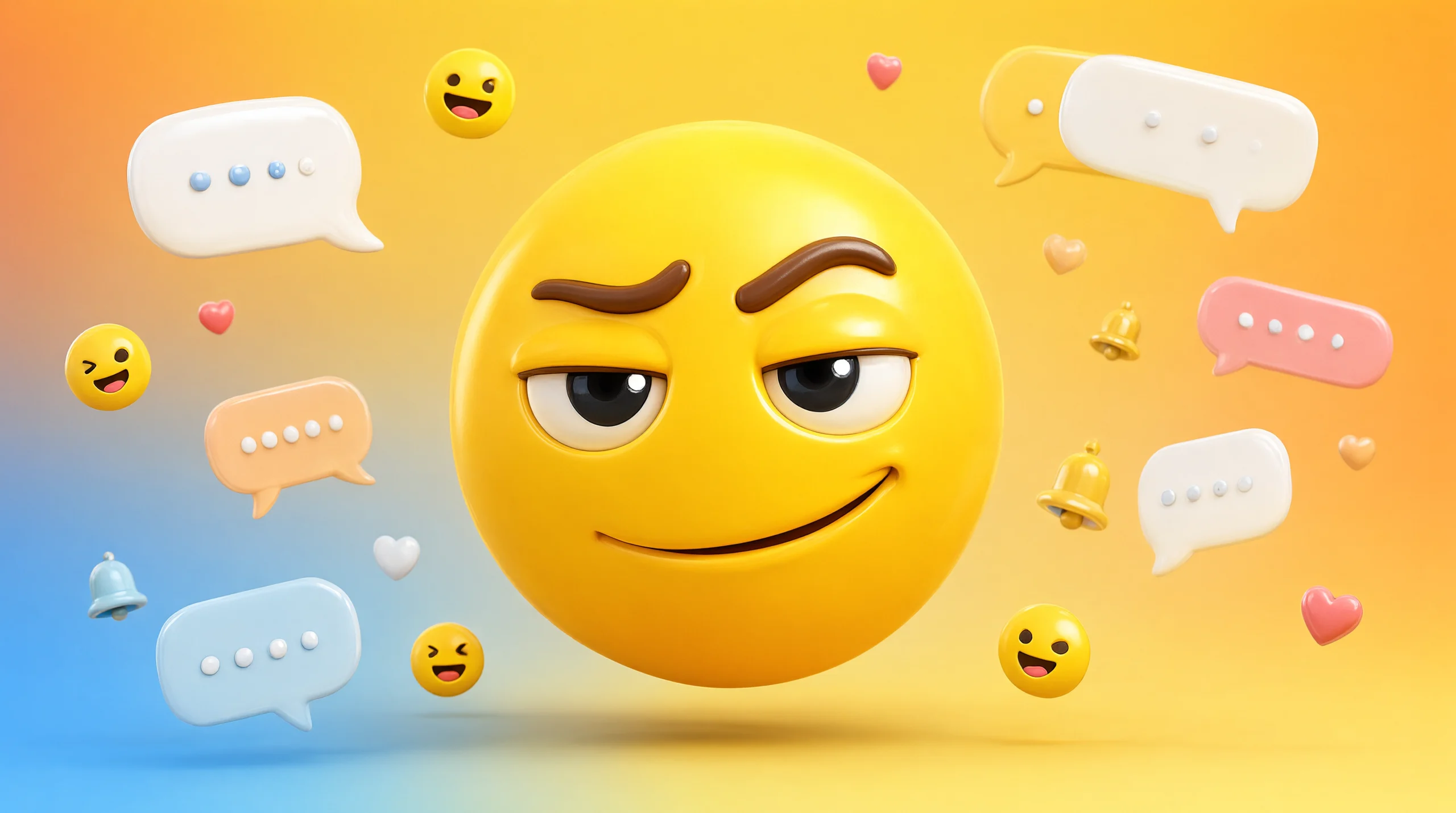
Have you ever wanted to say something sarcastic in a text message without sounding too serious? A sarcastic emoji can help you express irony, playful teasing, disbelief, or a hidden meaning with just one small symbol. Popular choices include 😏 (smirking face), 🙃 (upside-down face), 🙄 (face with rolling eyes), and 😒 (unamused face).
The 😏 smirking face is one of the most common emojis used to express sarcasm, although its meaning depends on the conversation. Other emojis can communicate different types of sarcasm, from friendly jokes to obvious frustration. Understanding these symbols can help you make your messages clearer, funnier, and more expressive on social media and in everyday conversations.
Quick Answer: What Is a Sarcastic Emoji?
A sarcastic emoji is a facial symbol used to communicate irony, teasing, mock surprise, or a meaning different from the literal words in a message. The 😏 smirking face is a popular choice for subtle sarcasm, while 🙃 often expresses awkward irony and 🙄 can show annoyance or disbelief.
For example:
- “Oh, you’re always right. 😏”
- “Great, another Monday! 🙃”
- “Wow, what a surprise. 🙄”
- “That went exactly as planned. 😒”
The right emoji depends on whether you want to sound playful, cheeky, annoyed, or deliberately ironic.
What Does a Sarcastic Emoji Mean?
Sarcasm happens when someone communicates a meaning that differs from the literal meaning of their words. It can be humorous, critical, affectionate, or slightly rude.
For example, imagine your friend arrives 30 minutes late. You might say, “You’re right on time! 😏” Your words suggest that your friend is punctual, but the situation makes it clear that you mean the opposite.
An emoji adds an emotional clue that helps readers understand your intention.
However, no emoji has one universal sarcastic meaning. The same symbol can communicate different feelings depending on the conversation, relationship, and platform.
Why Do People Use Sarcastic Emojis?
People use sarcastic emojis for several reasons:
- To make jokes: They help communicate playful teasing between friends.
- To express irony: They show that a statement should not be taken literally.
- To soften criticism: A playful symbol may make a comment seem less serious.
- To show disbelief: They can communicate that something sounds ridiculous or unexpected.
- To express frustration: Some emojis convey annoyance without requiring a long explanation.
- To add personality: They make digital conversations feel more expressive.
The key is choosing a symbol that matches the message you want to send.
10 Best Sarcastic Emojis and Their Meanings
Several emojis are commonly associated with sarcasm, irony, and teasing. Here are ten useful options and examples of how people use them.
| Emoji | Name | Common Sarcastic Meaning | Example |
| 😏 | Smirking Face | Cheeky sarcasm or knowing irony | “Oh, really? 😏” |
| 🙃 | Upside-Down Face | Awkward irony or pretending everything is fine | “Another deadline. Lovely. 🙃” |
| 🙄 | Face with Rolling Eyes | Annoyance or disbelief | “Sure, because that makes sense. 🙄” |
| 😒 | Unamused Face | Disapproval or dissatisfaction | “What a brilliant idea. 😒” |
| 😌 | Relieved Face | Self-satisfaction or understated irony | “I told you so. 😌” |
| 🤭 | Face with Hand Over Mouth | Amused teasing or a mischievous reaction | “You actually said that? 🤭” |
| 😬 | Grimacing Face | Awkwardness or uncomfortable irony | “That conversation went well. 😬” |
| 😎 | Smiling Face with Sunglasses | Playful confidence or exaggerated coolness | “Obviously, I planned that. 😎” |
| 😐 | Neutral Face | Dry humor or an intentionally flat reaction | “Fantastic. Just fantastic. 😐” |
| 🫠 | Melting Face | Embarrassment, overwhelm, or ironic frustration | “Only three hours of sleep. Amazing. 🫠” |
These meanings are common interpretations, not fixed definitions. A reader may understand an emoji differently based on the surrounding message.
1. 😏 Smirking Face: The Classic Sarcastic Emoji
The 😏 smirking face is one of the most recognizable choices for cheeky comments, knowing expressions, and playful sarcasm.
Its sideways glance and slight smile can suggest confidence, amusement, mischief, or the feeling that you know something another person does not.
When Should You Use 😏?
Use this emoji when you want to:
- Tease a friend about something they said.
- Make a cheeky observation.
- Suggest that a statement has a hidden meaning.
- Express playful confidence.
- Deliver a sarcastic compliment.
Examples:
- “You’re definitely the smartest person in the room. 😏”
- “Oh, so you finally remembered my birthday. 😏”
- “I knew you would agree with me eventually. 😏”
- “You look very innocent today. 😏”
Be careful when using it with people you do not know well. Depending on the context, 😏 can also appear flirtatious, smug, or suggestive rather than sarcastic.
2. 🙃 Upside-Down Face: Sarcasm With a Touch of Irony
The 🙃 upside-down face is particularly useful when something is inconvenient, frustrating, or ridiculous, but you want to respond with humor.
It can suggest that you are pretending to be cheerful even though the situation is not ideal.
Examples:
- “My internet stopped working during the meeting. Perfect. 🙃”
- “I studied all night, and the exam covered something else. 🙃”
- “Another problem to solve before lunch. Wonderful. 🙃”
- “I cleaned my room, and now it looks messy again. 🙃”
Unlike 😏, which often communicates a knowing or cheeky attitude, 🙃 frequently expresses awkward irony or a forced smile.
It is especially popular in casual conversations where the speaker wants to acknowledge an annoying situation without sounding overly negative.
3. 🙄 Eye-Roll Emoji: Sarcasm and Disbelief
The 🙄 face with rolling eyes is a strong option when you want to communicate annoyance, impatience, or disbelief.
It often suggests that a statement is predictable, unreasonable, or not worth taking seriously.
Examples:
- “He said he was going to be early this time. 🙄”
- “Of course, the printer stopped working again. 🙄”
- “Yes, because ignoring the problem always solves it. 🙄”
- “Another meeting that could have been an email. 🙄”
This emoji can sound more dismissive than 😏 or 🙃. It may be appropriate among friends, but it can seem disrespectful in professional conversations.
If your intention is to joke rather than criticize, consider using a lighter emoji.
4. 😒 Unamused Face: Dry and Cutting Sarcasm
The 😒 unamused face communicates dissatisfaction, skepticism, or a lack of enthusiasm.
It works well when your words are technically positive but your actual reaction is negative.
Examples:
- “Wonderful. More work for me. 😒”
- “That’s exactly what I needed today. 😒”
- “Oh, another change to the plan. Great. 😒”
- “Thanks for telling me at the last minute. 😒”
This emoji can make sarcasm feel sharper and more direct. Use it when you want your disappointment to be noticeable.
Remember that it can also communicate genuine displeasure rather than humor.
5. 😌 Relieved Face: Subtle, Self-Satisfied Sarcasm
The 😌 relieved face typically represents calmness, relief, contentment, or satisfaction. In certain conversations, it can also communicate understated confidence or a playful sense of being right.
For example:
- “I told you that would happen. 😌”
- “And who solved the problem? Me. 😌”
- “Another day of being right. 😌”
This emoji is less obviously sarcastic than 🙄 or 😏. Its meaning depends heavily on the words around it.
Use it when you want to sound calm, confident, or mildly smug without making your reaction too aggressive.
6. 🤭 Face With Hand Over Mouth: Playful Teasing
The 🤭 emoji represents a face covering its mouth. It can suggest giggling, surprise, embarrassment, or an attempt to hide a reaction.
In sarcastic conversations, it often adds a mischievous or teasing tone.
Examples:
- “You said that with complete confidence. 🤭”
- “I probably shouldn’t laugh, but that was funny. 🤭”
- “Well, someone has a lot to explain. 🤭”
It works best when the sarcasm is lighthearted. However, it can also make a message seem as though you are laughing at someone rather than with them.
7. 😬 Grimacing Face: Awkward Sarcasm
The 😬 grimacing face is useful when a situation becomes uncomfortable, embarrassing, or unexpectedly complicated.
It can make an ironic statement feel awkward rather than openly critical.
Examples:
- “I accidentally sent the message to the wrong group chat. Great job, me. 😬”
- “That presentation went exactly how I imagined. 😬”
- “I forgot the one thing I was supposed to remember. Brilliant. 😬”
This emoji is particularly useful for self-deprecating humor, where you make fun of your own mistakes.
8. 😎 Smiling Face With Sunglasses: Confident Sarcasm
The 😎 emoji often expresses confidence, coolness, or a relaxed attitude. When paired with an exaggerated statement, it can create humorous sarcasm.
Examples:
- “I finished everything five minutes before the deadline. Professional behavior. 😎”
- “Naturally, I knew the answer. 😎”
- “I make excellent decisions, obviously. 😎”
This emoji is generally more playful than confrontational. It works well when you want to joke about your own confidence or celebrate a small victory.
Sarcastic Emoji Combinations
Combining emojis can make your intended tone more noticeable. However, adding too many symbols may make a message harder to interpret.
Here are some combinations you can try:
| Emoji Combination | Possible Meaning | Example |
| 😏🙄 | Cheeky disbelief | “Yes, that sounds completely believable. 😏🙄” |
| 🙃😬 | Awkward frustration | “Everything went according to plan. 🙃😬” |
| 😒🙄 | Strong annoyance | “Here we go again. 😒🙄” |
| 🤭😏 | Mischievous teasing | “I know what you did. 🤭😏” |
| 😎😏 | Playful confidence | “I knew I would win. 😎😏” |
| 🫠🙃 | Overwhelmed irony | “Three deadlines on the same day. Perfect. 🫠🙃” |
These combinations are informal and do not have official meanings. Their interpretation depends on the message and the people communicating.
Sarcastic Emoji Examples for Text Messages
Sometimes, the easiest way to understand an emoji is to see it in a real conversation.
Here are examples for different situations.
When Your Friend Is Late
“You said you’d be here ten minutes ago. Impressive punctuality. 😏”
This message uses exaggerated praise to highlight the opposite of what actually happened.
When Something Goes Wrong
“My laptop crashed right before I saved the file. Best day ever. 🙃”
The upside-down face communicates frustration while keeping the message somewhat humorous.
When Someone States the Obvious
“Water is wet? That’s groundbreaking information. 🙄”
The eye-roll emoji reinforces the speaker’s disbelief or impatience.
When You Want to Tease Someone
“Oh, look who’s suddenly an expert. 😏”
This works when you share a playful relationship with the other person. In a serious discussion, it could sound insulting.
When You Make a Mistake
“I confidently walked into the wrong classroom. Nailed it. 😬”
The grimacing face signals embarrassment and self-directed humor.
When You Want a Short, Dry Response
“Fantastic. 😐”
Depending on the conversation, this may communicate genuine satisfaction or sarcastic disappointment.
Which Sarcastic Emoji Should You Choose?
The best choice depends on the emotional tone you want to communicate.
| Your Intention | Best Emoji | Why It Works |
| Playful or cheeky sarcasm | 😏 | Suggests a knowing, mischievous attitude |
| Awkward irony | 🙃 | Adds humor to an inconvenient situation |
| Annoyance or disbelief | 🙄 | Makes frustration more obvious |
| Dry criticism | 😒 | Communicates dissatisfaction |
| Sarcastic self-confidence | 😎 | Adds an exaggerated sense of coolness |
| Embarrassed humor | 😬 | Shows discomfort without requiring an explanation |
| Subtle self-satisfaction | 😌 | Can communicate calm confidence |
| Mischievous teasing | 🤭 | Suggests hidden amusement |
If you are unsure which emoji to use, start with the words themselves. Decide whether the message is playful, annoyed, embarrassed, or ironic, then choose a symbol that supports that meaning.
How Sarcastic Emojis Are Used on Social Media
Sarcastic emojis appear in comments, captions, replies, memes, and private messages across social platforms.
On Instagram, 😏 and 🙃 can accompany humorous captions, playful comments, or reactions to unexpected situations.
Example: “Living my best life, one unfinished task at a time. 🙃”
TikTok
On TikTok, sarcastic emojis may appear in video captions and comments to reinforce jokes, reactions, or ironic observations.
Example: “Me pretending I understood the instructions. 😏”
The meaning often depends on the video itself, so the same emoji may communicate something different in another context.
In WhatsApp chats, sarcastic emojis help friends and family express teasing or frustration without writing lengthy explanations.
Example: “You remembered to bring everything except the one thing we needed. 🙄”
Because people often know each other’s communication styles, they may understand sarcasm more easily in familiar conversations.
Facebook and Online Discussions
On Facebook, sarcastic emojis can accompany comments, reactions, and humorous posts. They may signal that a statement is ironic rather than sincere.
However, sarcasm can be misunderstood in public discussions, especially when people do not know one another.
Common Mistakes When Using Sarcastic Emojis
Even a familiar emoji can create confusion if you use it in the wrong situation.
1. Assuming Everyone Understands Your Sarcasm
Some people interpret messages literally, especially when they lack facial expressions or vocal cues.
Better approach: Add a few words that make your playful intention clearer.
2. Using 🙄 When You Mean Friendly Teasing
The eye-roll emoji can seem dismissive or disrespectful.
Better approach: Consider 😏 or 🤭 if your intention is to joke rather than show annoyance.
3. Overusing Sarcastic Emojis
Adding several sarcastic symbols to every message can make your communication feel negative or exaggerated.
Better approach: Use one appropriate emoji instead of filling the message with multiple reactions.
4. Using Sarcasm in Serious Conversations
A sarcastic emoji may make a genuine concern seem unimportant.
Better approach: When discussing a sensitive issue, communicate your feelings directly instead of relying on irony.
5. Forgetting That Context Changes Meaning
The 😏 emoji can be playful, flirtatious, smug, or sarcastic. A reader may interpret it differently from what you intended.
Better approach: Consider your relationship with the recipient and the subject of the conversation.
Practical Tips for Using Sarcastic Emojis Naturally
You do not need to memorize every emoji definition to communicate effectively. A few simple habits can help.
- Match the emoji to your tone. Use 😏 for cheeky comments and 🙃 for awkward irony.
- Consider your audience. Friends may appreciate sarcasm that would seem inappropriate at work.
- Keep messages understandable. A short sentence can clarify an emoji’s intended meaning.
- Avoid sarcasm when clarity matters. Important instructions and serious conversations usually benefit from direct language.
- Pay attention to reactions. If someone misunderstands your message, explain what you meant.
- Remember that platform designs differ. An emoji may look slightly different across devices, although its underlying character remains the same.
The most effective sarcastic messages combine clear wording with an emoji that reinforces the intended emotion.
FAQs:
1. What is the best emoji for sarcasm?
The 😏 smirking face is a popular choice for cheeky sarcasm and knowing comments. The 🙃 upside-down face works well for awkward irony, while 🙄 is more suitable for annoyance or disbelief.
2. What does 😏 mean in a sarcastic message?
The 😏 emoji can suggest that you are teasing someone, making a knowing remark, or expressing playful confidence. Its meaning depends on the surrounding words and relationship between the people communicating.
3. Is 🙃 a sarcastic emoji?
Yes, 🙃 is commonly used to communicate irony, awkwardness, or frustration disguised as humor. For example, “My computer crashed again. Wonderful. 🙃” suggests that the situation is not actually wonderful.
4. What is the difference between 😏 and 🙄?
The 😏 smirking face often communicates cheekiness, confidence, or playful sarcasm. The 🙄 rolling-eyes emoji more commonly expresses annoyance, impatience, or disbelief.
5. Which emoji shows passive-aggressive sarcasm?
The 😒 unamused face and 🙄 rolling-eyes emoji can communicate passive-aggressive frustration in some contexts. However, passive aggression depends on the overall message and behavior, not just the emoji.
6. Can I use sarcastic emojis at work?
You can use them with colleagues when the relationship and workplace culture make informal humor appropriate. However, sarcastic emojis may seem disrespectful in formal emails, sensitive discussions, or messages to unfamiliar clients.
7. What does 😐 mean when someone replies sarcastically?
The 😐 neutral face can suggest a deliberately flat reaction, dry humor, disappointment, or disbelief. For example, “Fantastic. Another deadline. 😐” may indicate that the person is not genuinely excited.
8. Are sarcastic emojis the same on every phone?
The underlying emoji character is generally the same across compatible devices, but its visual design can vary between operating systems, applications, and platforms. These visual differences may influence how a person interprets its expression.
Conclusion
Sarcastic emojis make digital conversations more expressive by adding irony, humor, teasing, and emotional clues to ordinary words. The 😏 smirking face is a popular option for cheeky comments, 🙃 communicates awkward irony, and 🙄 conveys disbelief or annoyance. Other choices, including 😒, 😬, 🤭, and 😎, can help express different shades of sarcasm depending on the situation.
To use sarcastic emojis effectively, consider your audience, choose a symbol that matches your intended tone, and avoid relying on emojis alone when clarity matters. If you are chatting with friends, writing a social media caption, or reacting to an unexpected situation, the right emoji can make your message feel more natural, humorous, and engaging.